Can Your Product Data Survive an AI Comparison? (2026)
Quick summary: Before a copilot picks a winner, your SKUs have to be comparable. Baymard still puts cart abandonment at 70.22%. This is a merchant audit — missing fields, mixed units, lying facets — not a strategic keynote.
Key Takeaways
- Baymard still puts cart abandonment at 70
- 22%
- Baymard 70
- 22% still applies when the "winner" at comparison has a total or size that checkout rejects
- This is part 64 of eCommerce AI Agents
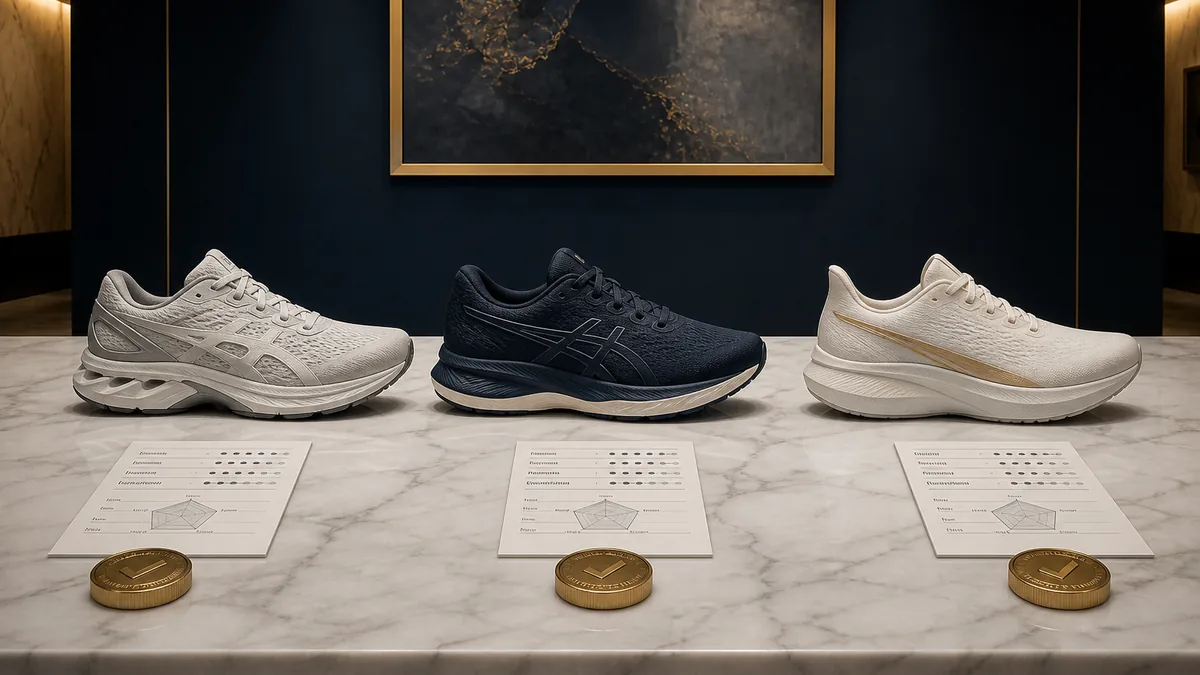
Table of Contents
An AI comparison is not a brand keynote. It is whether two SKUs in the same category share required attributes, one taxonomy, honest ATP and price with asOf, and facets that match the passport — or the agent invents a winner table from adjectives.
Baymard 70.22% still applies when the “winner” at comparison has a total or size that checkout rejects.
The job. Audit one category — missing data, weak descriptions, inconsistent specs, incomparable SKUs, lying facets — before you invite a comparison copilot or run a “win the agent” sprint.
This week. Copy ai-comparison-audit-framework.md. Pick one category. Score the five checks. Do not average the catalog.
A person still signs. Comparison-table copy, claims, and publish. Draft maybe; merchandiser publishes; deterministic claims gates in PIM.
Skip it when required attributes are empty, units disagree across SKUs, or ATP/price have no asOf. Fix the catalog contract and passport first.
This is part 64 of eCommerce AI Agents. The strategic decision layer is post 36. The shopping-agent read object is post 62.
Our take: fail the category closed until required attributes share one taxonomy and ATP/price carry asOf. You delay comparison-table content. You stop losing to a worse product with cleaner fields.
Copy the audit —
ai-comparison-audit-framework.md. Passport:ai-product-passport-schema.md. Contract:ai-ready-catalog-contract.md. Decision-layer signals:agent-choice-optimization-signals.md.
FactualMinds is an AWS Select Tier Services Partner. We do not invent comparison win-rate KPIs.
The five checks (one category, not the whole catalog)
| Check | Pass | Fail |
|---|---|---|
| Missing data | Required attrs populated | Empty size / width / material |
| Weak descriptions | Specs in fields, not only prose | Adjective-only copy |
| Inconsistent specifications | Same unit and taxonomy across SKUs | “M” vs “Medium” vs “m ” |
| Missing comparisons | Shared attribute schema so SKUs are comparable | Incomparable SKUs; no common keys |
| Poor product attributes | Filter/facet = agent fields = passport | Facets lie; chat reads different flags |
Score your category. Do not submit a demo table as a business case.
AI may also weigh reviews, availability, delivery, return policy, compatibility — those belong on the passport and the decision-layer artifact. This audit asks whether the merchant file is even comparable.
How to run the audit (90 minutes, one category).
- Export required attrs, units, facet definitions, and passport fields for 20–50 live SKUs (your count, not ours).
- Mark missing required keys. One empty width on apparel is a fail for that SKU, not a 2% “data quality” average that hides it.
- Diff units. Convert nothing in a spreadsheet as a fake fix — fix the taxonomy in PIM.
- Diff PLP facets vs passport. Every disagree is a fail.
- Pull three SKUs a human merchandiser would compare. If they do not share a schema, “missing comparisons” fails the category.
- Read five descriptions. If a spec exists only in prose, “weak descriptions” fails those SKUs.
- Do not score reviews or brand love here. That is post 36. Do not score GEO rank. That is not a thing we sell.
Goldens for your copilot, if you have one: given two SKUs where a required attr is empty, the agent returns incomparable, not a winner. Must-not-invent-claims. Must-not-invent-discount.
Adobe July 2026 AI-referral +62% YoY and 60% higher conversion (Digital Commerce 360) remain channel mix, not a comparison win rate. McKinsey / EuroCommerce June 2026 61% European AI discovery is discovery behavior, not your bake-off score.
SEO is not obsolete. This audit does not replace Shopping attribute feeds. It is whether an agent can compare in addition.
Worked fixture (replace with your SKUs)
Three running-shoe SKUs in one category. Worksheet only.
| SKU | Width field | Units | ATP asOf | Comparable? |
|---|---|---|---|---|
| SHOE-A | D | mm drop in field | Yes | Candidate |
| SHOE-B | (empty; “wide fit” in title) | Drop in prose | Nightly dump | Fail missing data + weak description |
| SHOE-C | Wide | Drop in inches | Yes | Fail inconsistent specification vs SHOE-A |
An agent that still names a winner among these three is guessing. Fail closed.
How this sits next to the passport and the storefront
flowchart TB
  PIM[PIM contract post 35]
  Pass[Passport post 62]
  Store[Storefront APIs post 61]
  Audit[This audit]
  Choice[Decision layer post 36]
  PIM --> Pass
  PIM --> Store
  Pass --> Audit
  Store --> Audit
  Audit --> Choice
If post 10’s shopping readiness scores below 8, do not invite a copilot to compare live. If post 61 APIs are scrape-only, the audit will fail on accuracy even if PIM looks pretty.
Do not default to multi-agent to “run comparisons.” One read harness with getProduct is enough until the split test says otherwise. Prefer tools over Memory for live specs.
What broke
What broke — A merchandiser asked a harness to “write comparison modules for the PLP” so agents and humans would see the same bake-off. Attributes were still empty; units mixed EU and US size. Detection: published copy claimed a waterproof rating the SKU was not certified for; goldens had no must-not-invent-claims case; Policy was off because “it was only content.” Fix: unpublish modules; run this audit; put specs in fields; claims gates in PIM; merchandiser publish; strip
publishProduct. Lesson: comparison copy is not a substitute for comparable data. Weak descriptions plus auto-publish is how you lose the bake-off in court, not just in the model.
Inventing a discount so the agent “wins” is the post-36 failure mode. This audit should have already failed on missing promo-engine fields.
What to use instead
- A “win the agent” sprint before the audit. Fix catalog contract and passport first.
- Comparison-table copy instead of fields. Prose is not a schema.
- Auto-publish bake-off modules. Draft maybe; merchandiser publishes.
If you only do one thing
Align PLP facets with passport fields. If shoppers filter “waterproof” and the agent reads a different flag, that is an audit fail — fix navigation before you write comparison copy.
For your technical lead
On June 17, 2026, AgentCore Harness reached general availability (What’s New). Useful when your agent compares SKUs with tools. Useless as a patch for empty attributes.
AWS lifecycle notice (June 30, 2026) — Amazon Bedrock Agents Classic is in maintenance for new customers after July 30, 2026. If you host a comparison copilot, use Bedrock AgentCore. Full matrix: lifecycle roundup. Third-party comparison agents do not run on your Classic stack.
First-party signals we reuse (not eCommerce outcomes) — Gateway server-side tools cut median tool round-trip ~180 ms → ~95 ms on a B2B CRM assistant (12 tools, ~8k turns/day) — Gateway post. Platform TCO silhouette: support-style AgentCore at 50K sessions/mo ~$791/mo platform + model (decision guide). Those numbers size your host. They do not measure “won vs competitor.” Model remaining sessions on the AgentCore pricing calculator.
Your comparison copilot: Harness, Gateway getProduct / getInventory / getPrice, goldens that must-not-invent a winner when a required field is empty. Cedar on any write (do not attach publishProduct). Export to Strands only for hop caps — Agents-as-Tools / Graph, not Swarm on merchandising writes. No native Shopify connector. Skip Agents Classic after July 30, 2026. Browser off.
Gateway ~180 → ~95 ms is the CRM canary. Catalog p95 dominates. ~$791/mo at 50K sessions is a support-shaped host floor, not savings from “winning comparisons.”
Context: Python 3.12+, boto3 ≥ 1.38.0, supported region. Sketch — pin the model your account allows.
# Sketch — InvokeHarness comparison turn. Fail closed if getProduct lacks required attrs.
# runtimeSessionId ≥ 33 characters. Do not attach publish or discount-issue tools.
import boto3
import uuid

client = boto3.client("bedrock-agentcore", region_name="us-west-2")
response = client.invoke_harness(
    harnessArn="arn:aws:bedrock-agentcore:us-west-2:123456789012:harness/compare-read",
    runtimeSessionId=str(uuid.uuid4()),
    messages=[{
        "role": "user",
        "content": [{"text": "Compare SKU-TEE-BLU-M and SKU-TEE-BLU-L on width and ATP only"}],
    }],
)
Goldens must fail if the model fills width from the title.
What to do this week
- Copy
ai-comparison-audit-framework.md. - Pick one category. Score the five checks. Do not average the catalog.
- Align facets with passport fields. Lying navigation is an audit fail.
- Confirm post 35 contract and post 62 passport before a comparison-content sprint.
- Read post 36 for what you still cannot control (third-party rank).
- If you host a copilot, add goldens that fail on invented specs. Browser off.
- Model sessions on the AgentCore pricing calculator.
- Run
monday-checklist.md. Contact us if the first fail is units, not copy.
What this post doesn’t cover
- Strategic decision layer — post 36
- Shopping-agent information object — post 62
- Catalog contract — post 35
- 13-check copilot invite score — post 10
- A measured “agent picked us X%” KPI from a named merchant — we are not inventing it
It does not invent comparison win-rate KPIs. 70.22%, +62%, 60%, 61%, ~180→95 ms, and ~$791/mo are the published figures we reuse.
Primary next step: contact us or see Amazon Bedrock.
FAQ
When should you NOT run an AI comparison audit as a merchandising campaign?
Skip a branded “win the agent” sprint when required attributes are empty, units disagree across SKUs, or ATP/price have no asOf. You are not in an honest bake-off. Fix the catalog contract and passport first. Do not invent a 15% code so the model can pick you.
How is this different from when AI agents choose products?
Post 36 is the strategic decision layer — what intermediaries weigh (offer truth, delivery, reviews, policy). This post is a merchant audit of whether your SKUs can even be compared: missing data, weak descriptions, inconsistent specifications, missing comparison schema, poor attributes. Link 36; do not rewrite it.
What could go wrong if descriptions are strong but attributes are empty?
The agent quotes adjectives and invents a winner table. Size “M” vs “Medium” vs “m ” makes two colorways incomparable. Specs must live in fields with one taxonomy. Prose is not a schema.
When should you NOT let an agent publish comparison-table copy onto the PDP?
Auto-published bake-off copy will drift from specs and invent certifications. Draft maybe; merchandiser publishes; deterministic claims gates in PIM. Harness is a draft loop, not a publish button.
What could go wrong if facets on the PLP disagree with passport fields?
Shoppers filter “waterproof”; the agent reads a different flag; checkout sells a non-waterproof SKU. Facets must equal agent fields. Lying navigation is a comparison failure with a storefront UI.
Is AgentCore required to survive third-party comparisons?
No. External agents need your structured object. Harness (GA June 17, 2026) hosts YOUR copilot or draft loop. No native Shopify connector. Skip Agents Classic after July 30, 2026. A runtime does not fill empty width.
Need a category audit before a comparison copilot? Contact FactualMinds or see Amazon Bedrock.
AWS Cloud Architect & AI Expert
AWS-certified cloud architect and AI expert with deep expertise in cloud migrations, cost optimization, and generative AI on AWS.